This article may contain affiliate/compensated links. For full information, please see our disclaimer here.
This is a guest article written by Mike Hansky.
If you have just arrived in London and the transport map looks like a plate of spaghetti, the good news is that moving around the city on London public transport is simpler than it first appears. You do not need a paper ticket for every ride, and you do not need to learn every line before you leave the airport.
One contactless bank card, or the wallet on your phone, will take you on the Tube, the Elizabeth line, the buses, and the river boats.
This guide is practical for two people traveling together and includes: how to pay, which routes save time, and when a river boat beats the Tube for sightseeing. It is a planning guide, not a trip diary, and the fare figures below are the adult pay-as-you-go prices in force as of October 2026.
Note: Always check Transport for London (TfL), the local government authority responsible for managing most of London’s public transport network, before you travel, as prices can change.
How to Pay for London Public Transport Without the Fuss
Tap the same contactless card or phone on the yellow reader at the start of each journey. On the Tube, DLR, London Overground, Elizabeth line and river boats, you also touch out at the end. On buses and trams, you only touch in when you board.
Use one card or device per person, and stay with the same one all day. If you touch in with your phone and touch out with a plastic card, the system treats that as two incomplete journeys and can charge you a maximum fare. You also cannot share one contactless card between two people on the same ride.
You do not need an Oyster card if you already have a contactless debit or credit card, or a phone wallet that supports it. An Oyster card is still useful if your bank charges overseas fees, or if you would rather load a set amount in advance. Check with your card issuer before you travel, because some foreign cards add a transaction fee on each tap.
Fares are capped, which is the part that saves most visitors money:
- A single adult bus or tram journey is £1.85. The Hopper fare gives you unlimited bus and tram journeys within one hour of first touching in, automatically, if you keep using the same card or device.
- Bus and tram travel is capped at £5.55 a day, and at £26.10 from Monday to Sunday.
- Tube, DLR, Overground, Elizabeth line and most National Rail journeys in Zones 1-2 are capped at £8.90 a day, and at £44.70 from Monday to Sunday.
Those Tube and rail caps come from TfL’s adult fares for 2026. The bus figures are the adult prices in force from November 1, 2026. Paper single tickets, where they are still sold, cost more than pay as you go, so you can skip them.
River boat journeys are the exception: they do not count towards the TfL daily cap. You can still pay with the same contactless card or Oyster, but a long ride on the Thames can cost more than a day’s Tube travel in the center. More on that below.
The Tube and the Elizabeth Line in London
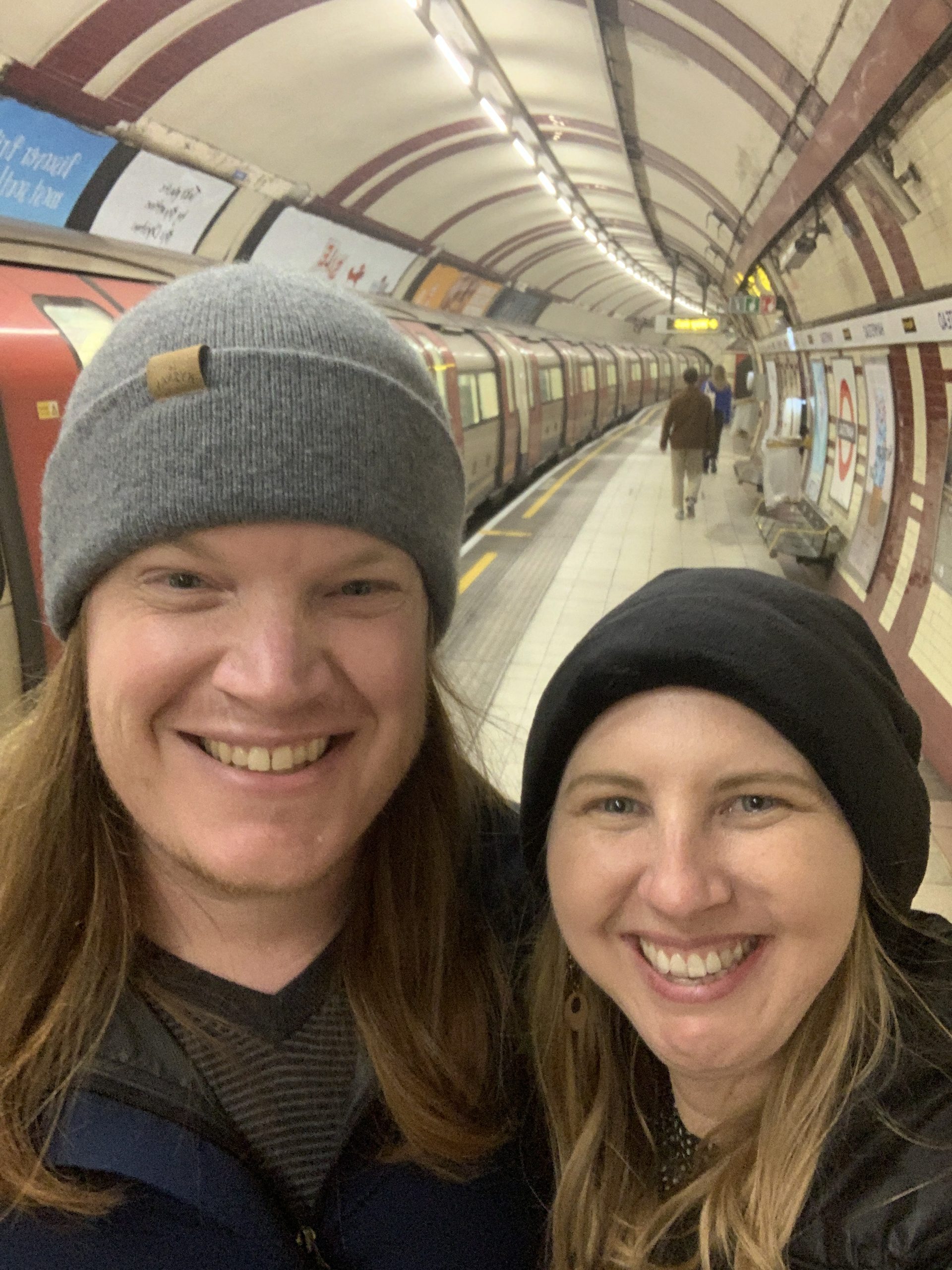
The Tube is still the fastest way across central London when you want to go point to point, especially in the rain or if you are crossing several neighborhoods. The map looks busy, but you only need the lines that serve your plans for the day.
A few habits make it much less stressful:
- Stand on the right on escalators, and let people walk on the left.
- Move down inside the carriage. The doors will open again at the next stop.
- If a platform is packed, the next train is often only a minute or two away in the center of the city.
- Peak fares apply on weekday mornings and evenings (check the exact hours on TfL). Weekends and the middle of the day are off-peak. On a short central journey, the difference is small, but it adds up if you make many rides.
The Elizabeth line is the one that surprises first-timers. It is a full-size train, not a deep Tube, and it is the easiest east-west route through the centre: Paddington, Bond Street, Tottenham Court Road, Farringdon, Liverpool Street and Canary Wharf, with a direct run from Heathrow into town. If your hotel is near one of those stations, it can replace two or three Tube changes.
Flying into Stansted instead? Our guide to getting from Stansted Airport to central London compares the train, coach, and other transport options for reaching the city.
Some lines also run through Friday and Saturday nights (the Night Tube). On other nights, night buses cover the same job. The free TfL Go app shows live arrivals and step-free routes. That last point matters if you would rather avoid stairs. Many older tube stations in London have them, and the app is more reliable than guessing from the paper map.
Tip: If you are traveling as a couple, each of you needs your own card or phone. There is no couple discount on pay-as-you-go. What you do get is a calmer pace. You can take the bus and talk, or the boat and look at the city, instead of rushing for every train.
Buses in London: Often the Calmer Way to See the City
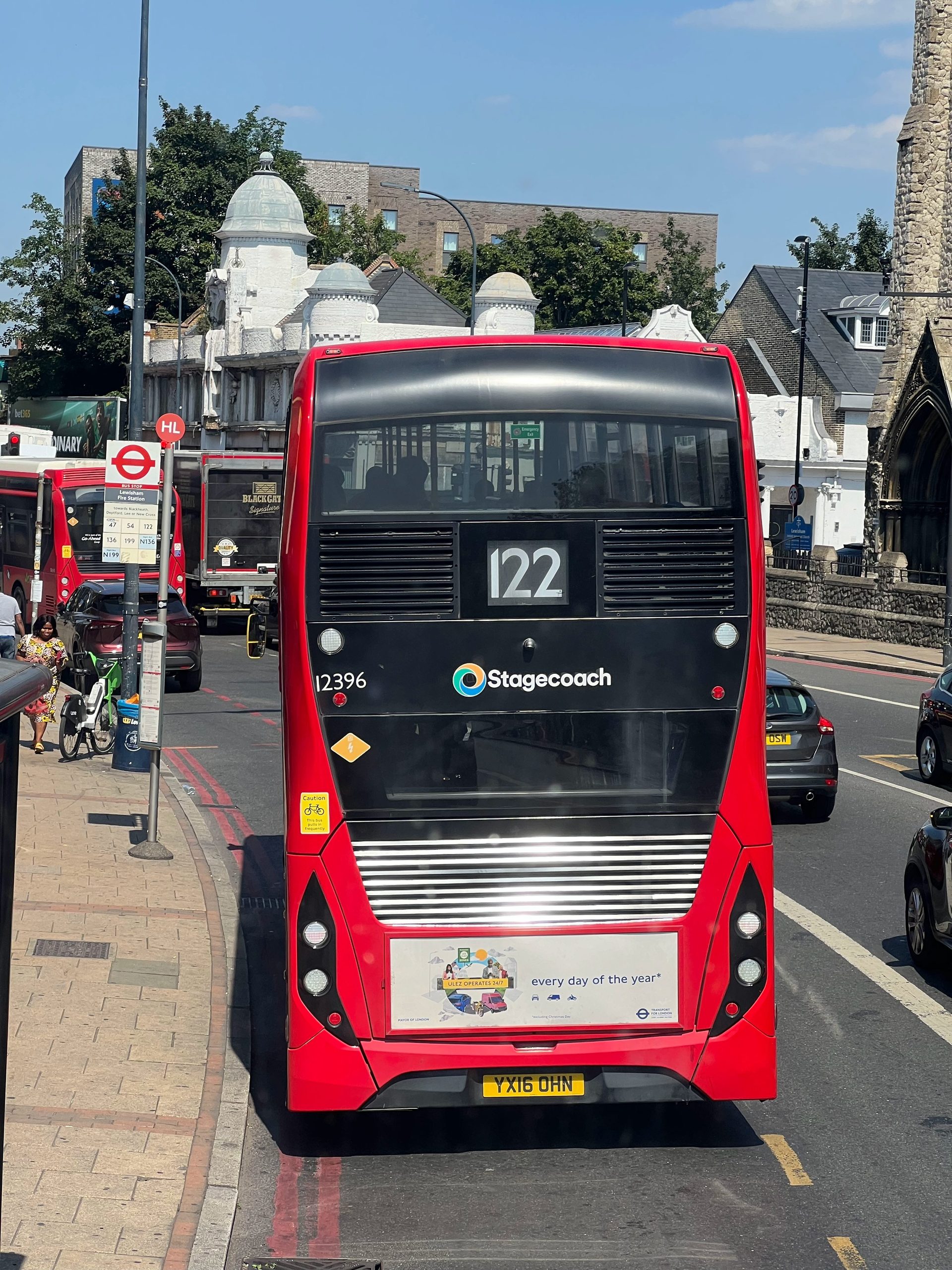
London’s buses are frequent. They run all over the city, and they show you the streets rather than a tunnel. A single adult fare is £1.85, and if you change buses within an hour, you do not pay again, thanks to the Hopper fare. You only touch in once, on the reader by the driver, as you board. You do not touch out.
For a couple, buses are often the less stressful choice for short hops. Covent Garden to the South Bank, a museum to a nearby neighborhood, or the last stretch from a station to your hotel. They are also the fallback when a Tube station is closed or feels overcrowded.
A few practical notes:
- The destination is on the front of the bus. If you are unsure, the next-stop screen and audio announcements on board will help.
- Hail the bus by putting your arm out, and ring the bell in good time for your stop. You can input your destination in Google Maps before you board the bus and follow your journey so you know when your stop is coming.
- The rear doors on many double-deckers are for getting off only.
- Seats at the front of the upper deck are the ones with the best views, if you can manage the stairs.
Because of the Hopper fare and the daily cap, a day spent mostly on buses stays cheap. If you also use the Tube, TfL works out the best value automatically when you keep using the same card.
Tip: A red bus is also the simple way to stitch a walking day together. Ride one stretch, get off when something looks interesting, and hop on the next bus within the hour without paying again.
River Boats in London: When the Thames Beats the Tube
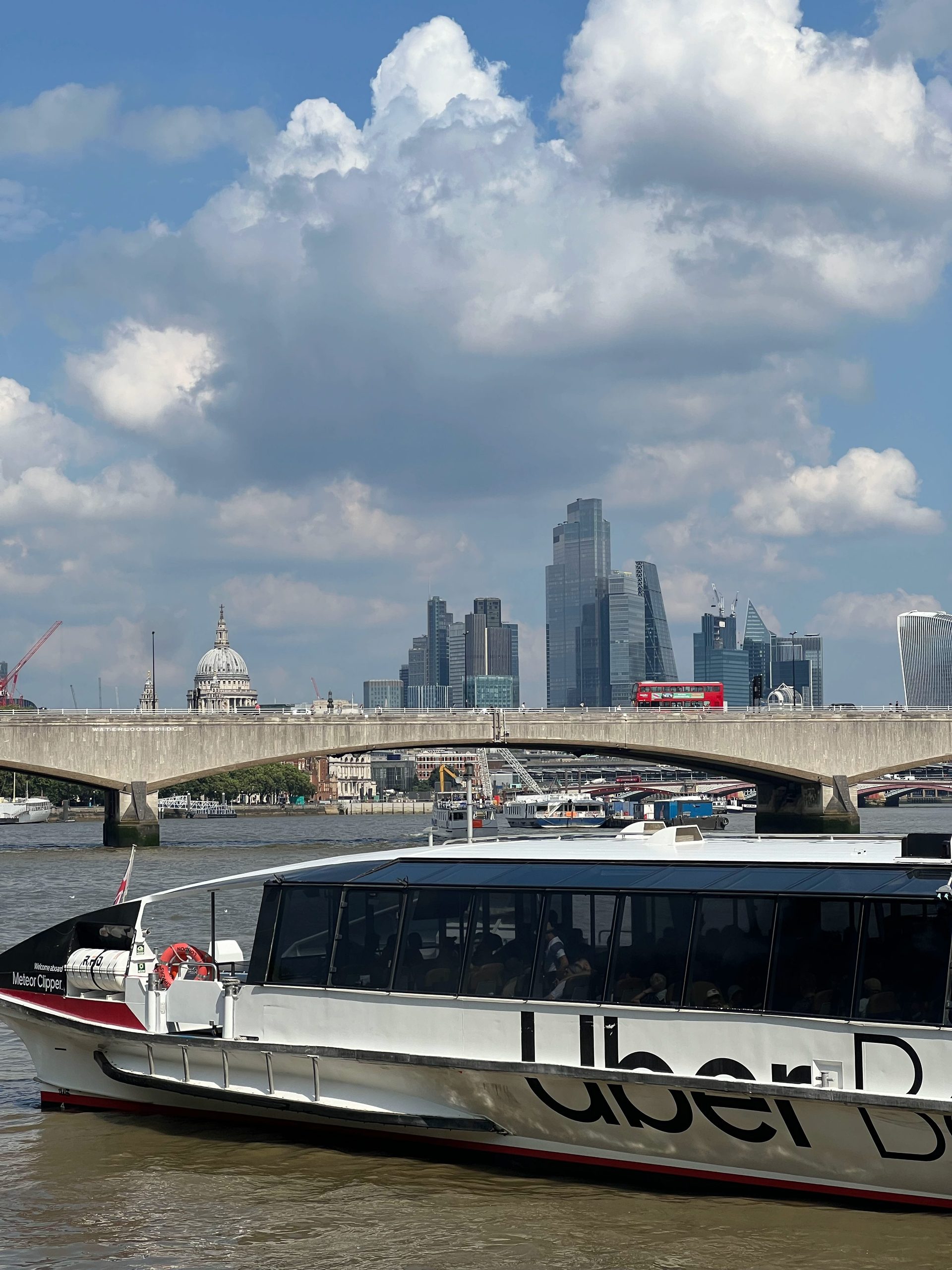
The river buses are run by Uber Boat by Thames Clippers, and they call at piers from Putney in the west to Barking Riverside in the east, including Westminster, the London Eye, Bankside, London Bridge City, Canary Wharf and Greenwich.
You can pay as you go with the same contactless card or Oyster you use on the Tube. Touch in and out at the pier, and use the same card if you change boats. Each person needs their own card. There are no Oyster top-up machines at the piers, so if you are using Oyster, make sure it has enough credit before you arrive. To see every pier and route before you go, my Uber Boat map lays out the whole network for free.
This is the part that catches people out: river fares do not count towards the TfL daily cap. On the prices published by Thames Clippers (in force until 31 October 2026), an adult contactless or Oyster fare is £6.20 off-peak or £6.70 peak in the East or West zone, and £9.90 off-peak or £10.80 peak in the Central zone.
A hop-on hop-off day ticket, bought in advance online, can be better value if you plan to ride more than once. Peak and off-peak times are based on when you touch in, and they are not the same as Tube peak hours, so check the current times on the Thames Clippers ticket page before you go.
So when is the boat worth it?
Take the river when the journey is the point. The stretch between Westminster and Greenwich is the classic one. You pass the Houses of Parliament, the South Bank, St Paul’s, Tower Bridge, and then the long reach down to the Old Royal Naval College. The Tube is faster for that trip, but you see none of it. The boat also makes sense for short hops along the South Bank, or for crossing the river to Canary Wharf without changing trains.
Skip the boat, or save it for one highlight ride, if you are only trying to get across town quickly, or if you have already hit your Tube cap and do not want an extra fare on top.
Tip: Sit on the right-hand side heading east from Westminster if you want the palaces and the city skyline. The reverse is true heading west. If the open deck is windy, the cabin is still a window seat on the city.
A Simple Way to Choose How to Get Around London
- Short hop in the centre, and the weather is fine: walk, or take a bus.
- Across town, or if you are short on time: Tube or Elizabeth line.
- You want the views and have one special ride to spare: the river boat, especially Westminster to Greenwich or along the South Bank.
- Late at night: Night Tube on some lines at weekends, and night buses every night.
- Stairs are a problem: check TfL Go for a step-free route before you set out.
A Few Extra Tips That Can Prevent a Bad Experience
- Download TfL Go before you arrive. It is the official app for live arrivals, disruptions and step-free routes.
- Keep a plan B in your pocket. Engineering work is common at weekends in London, and the app will show the current advice.
- If a gate will not open, there are staff at almost every central station who can help.
- You do not need to understand the whole network on day one. Pick the one or two lines that serve your hotel, and let the app do the rest.
London is a big city, but it is not a difficult one to move around once you have tapped in for the first time. After that, the same card does the rest.
About the Author
Mike Hansky is a travel writer and co-founder of londontouristmap.com, a free interactive map of London. He writes practical, researched guides for first-time visitors, with a focus on getting around, neighborhoods, and planning a trip without the stress.
Leave a Reply